


 Flickr
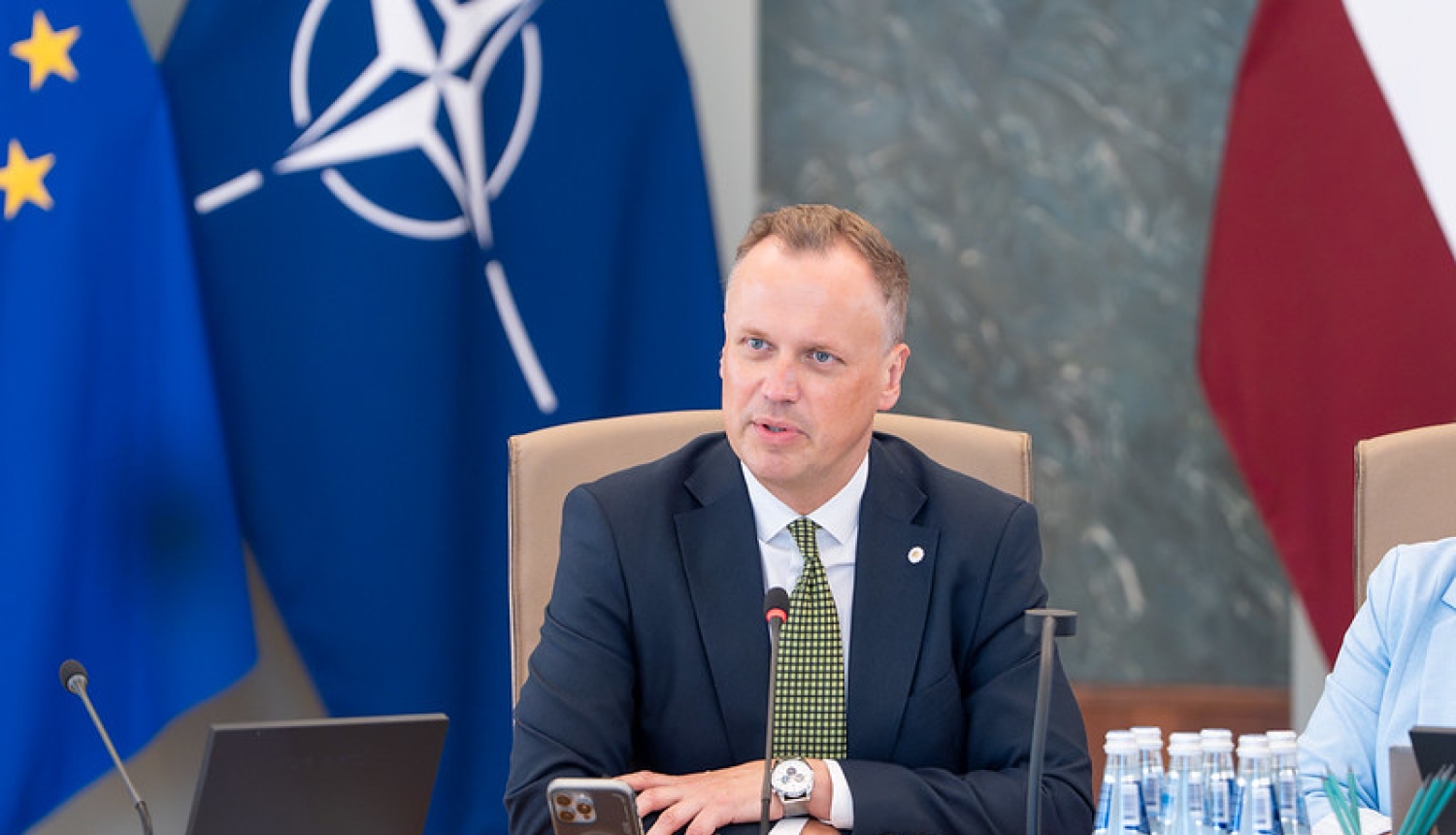
On 20 July, the Thematic Committee for the Socio-Economic Development and Security of Latvia’s Eastern Territory convened under the leadership of Edgars Tavars, Minister for Smart Administration and Regional Development. The Committee agreed on a number of actions aimed at strengthening existing support measures for Latvia’s eastern border region and accelerating decision-making to enhance regional security, business development and human capital.
Opening the meeting, Minister Edgars Tavars stressed that Latvia’s eastern border region is one of the Government’s key priorities. As the Latgale region and Alūksne Municipality form part of the European Union’s and NATO’s external border, their development is not only a matter of regional policy but also an important issue for the security of both Latvia and Europe. The Minister emphasised that strengthening security must go hand in hand with business development, accessible public services and opportunities for people to live and work in the border region, as a populated and economically vibrant border area is inherently more secure.
During the meeting, the Committee reviewed proposals submitted by municipalities in the eastern border region, as well as by the Latgale and Vidzeme Planning Regions, on additional measures to strengthen regional security and development. Based on these proposals, the Committee agreed on the next steps in implementing the Action Plan for the Economic Growth and Security of Latvia’s Eastern Border Region 2025–2027 and instructed line ministries to prepare further proposals to strengthen entrepreneurship, improve access to public services and enhance regional resilience.
Among other decisions, the Committee tasked all ministries with assessing, within two weeks, the possibility of reallocating additional support to Latvia’s eastern border region or introducing territorially differentiated support measures. Ministries are required to submit concrete proposals to the Ministry of Smart Administration and Regional Development (VARAM), which will consolidate the submissions and present them at the Committee’s next meeting. The Minister also called on municipalities to prioritise the implementation of shelter adaptation projects. All 64 ERDF-funded projects covering the adaptation and equipping of 509 shelters have now been approved, all funding agreements have been signed, and financing is available to municipalities for project implementation.
To strengthen the regional business environment, the Committee agreed to further develop the Latgale Special Economic Zone by preparing an updated vision for its future development and assessing opportunities to expand support for sectors of strategic importance to Latgale, including food production and processing. At the same time, VARAM, in cooperation with the Ministry of Finance and the Ministry of Justice, will urgently advance amendments to Cabinet regulations to facilitate the implementation of European Union-funded public infrastructure projects supporting entrepreneurship in the eastern border region. In addition, VARAM, together with the Ministry of Economics and the Ministry of the Interior, has developed a procurement catalogue for shelter equipment, while the Ministry of Economics will prepare practical guidelines and continue developing shelter standards to simplify project implementation and accelerate delivery by municipalities.
The Committee also instructed the Ministry of Economics, ALTUM, the Ministry of Finance, the Ministry of Agriculture and VARAM to assess options for expanding credit guarantee schemes and improving the conditions of existing business support programmes.
Reinis Bērziņš, Chairman of the Management Board of ALTUM, said:
"Businesses in Latvia’s eastern border region will benefit from more favourable financing conditions. In the coming months, we will launch new loan and guarantee programmes, including refinancing solutions and small loans with capital rebates for rural areas. These measures will help businesses implement new investment projects and stimulate economic development across the region."
The Committee also supported advancing amendments to Cabinet regulations aimed at improving access to healthcare in the eastern border region, including expanding emergency medical services at Alūksne Hospital. In addition, the Ministry of Economics was tasked with preparing and submitting, through the Unified Legal Acts Drafting and Coordination Portal, an information report on the development and competitiveness of tourism in Latvia’s eastern border region.
The Committee also reviewed progress in implementing the Action Plan for the Economic Growth and Security of Latvia’s Eastern Border Region 2025–2027. The Action Plan comprises 59 measures. To date, €131 million has been invested in strengthening security, €150 million in economic development and €70 million in human capital development. On 27 June 2026, the Cabinet of Ministers supplemented the Action Plan with six additional measures. The decisions adopted by the Committee on 20 July provide for the preparation of further proposals to address municipal priorities not yet fully reflected in the Action Plan and to further strengthen the resilience of Latvia’s and the European Union’s eastern border region.
The next meeting of the Thematic Committee is scheduled for 8 September 2026.