


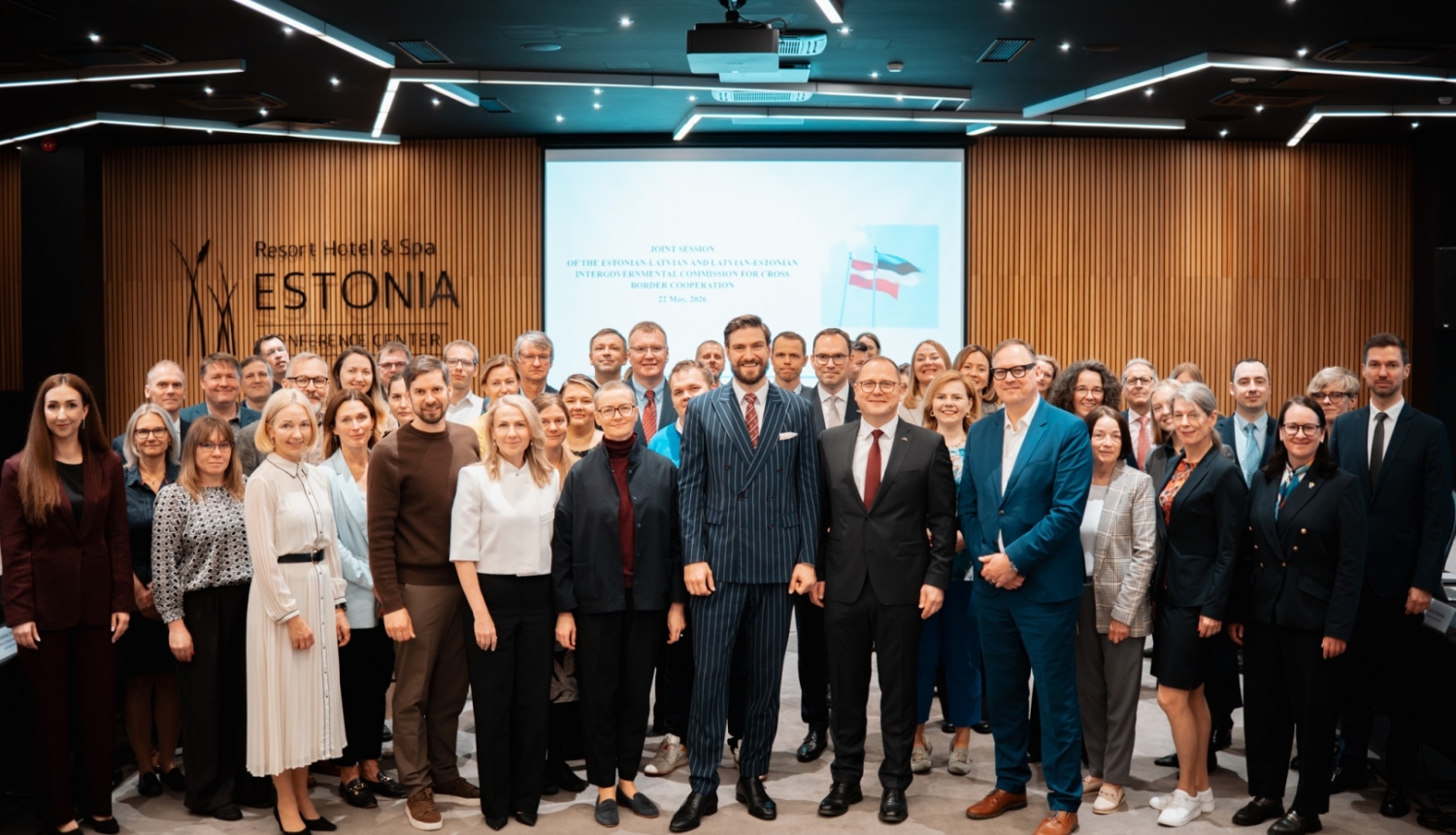
On Friday, May 22, a meeting of the Latvian-Estonian Intergovernmental Commission for the Promotion of Cross-Border Cooperation was held in Pärnu, during which current issues of bilateral cooperation between the two countries in the fields of security, civil protection, public services, and regional development were discussed.
Raimonds Čudars, Minister of Smart Administration and Regional Development: “In the cooperation between Latvia and Estonia, we are united not only by a shared border, but also by shared values, security challenges, and a shared responsibility for the development of the Baltic region. Close coordination in the areas of civil protection, crisis management, and cross-border security is particularly important. At the same time, our cooperation brings practical benefits to citizens—in healthcare, public transportation, regional mobility, and other areas important to daily life. I am convinced that through mutual trust and regular dialogue, we will continue to strengthen our partnership and the resilience of the Baltic region.”
During the meeting, issues related to civil protection and crisis management were discussed, including the coordination of cross-border rescue operations, the implementation of joint exercises, and cooperation in planning for mass population movements and evacuations in crisis situations. Issues regarding the assurance of uninterrupted food supplies in crisis situations were also discussed, including joint solutions for maintaining logistics flows and timely information exchange.
Turning to security issues, the risks posed by unmanned aerial vehicles were analyzed, along with opportunities to strengthen institutional cooperation to address them. The need to improve the regulatory framework and continue mutual consultations was emphasized.
The meeting also addressed practical cooperation issues regarding the provision of public services in the border region, including access to healthcare services for Latvian residents at Valga Hospital, as well as opportunities to develop joint solutions in the area of animal shelter services. In the field of transport, an overview was provided of the Valga–Valka and Ikla –Ainaži–Salacgrīva, noting its importance in improving mobility and connectivity, as well as the need to continue working on ensuring the long-term viability of these solutions.
During the meeting, issues related to geodetic and cartographic work for the maintenance of the Latvian–Estonian state border were also discussed, emphasizing the importance of modern technologies in ensuring accurate border information. At the same time, attention was focused on the impact of renewable energy project development in border areas, as well as regulations regarding the certification of biomethane origin. On these issues, the parties expressed their readiness to continue the dialogue at the expert level, seeking practical and balanced solutions.
Cooperation on containing African swine fever was discussed, emphasizing the importance of cross-border coordination, regular data exchange, and coordinated action in border areas to more effectively mitigate the risks of the disease spreading.
The Latvian-Estonian Intergovernmental Cross-Border Cooperation Commission was established to promote the socio-economic development of regions in both countries, ensure a coordinated approach to addressing border challenges, and identify common areas of cooperation.
This year’s meeting was co-chaired by Hendrik Johannes Terras, Estonia’s Minister of Regional Affairs and Agriculture, and Raimonds Čudars, Latvia’s Minister of Smart Administration and Regional Development. The meeting was attended by Kristīne Lauritsa, Ambassador Extraordinary and Plenipotentiary of the Republic of Latvia to the Republic of Estonia, and Ēriks Marmei, Ambassador Extraordinary and Plenipotentiary of the Republic of Estonia to the Republic of Latvia, as well as specialists from the relevant ministries of both countries and local government leaders and representatives.