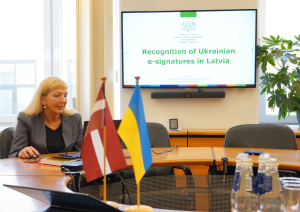
Latvia has become the first country in the world to legally recognize Ukrainian e-signatures, thus taking a significant step towards strengthening closer cooperation and supporting Ukraine's digital integration, opening up more convenient communication and cooperation opportunities for Ukrainian citizens living in Latvia, as well as for Latvian and Ukrainian businesses and administrative institutions.
In close cooperation between the Ministry of Smart Administration and Regional Development (VARAM), the Latvia State Radio and Television Centre (LVRTC), and the Ukrainian Ministry of Digital Transformation, both the legal framework and the technical solution have been developed and implemented.
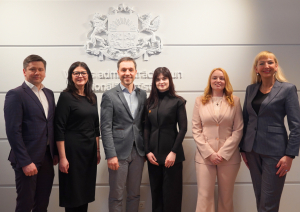
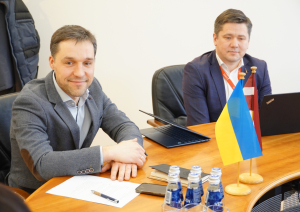
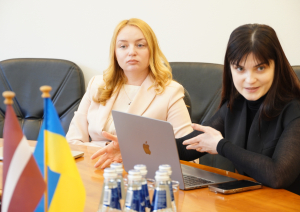
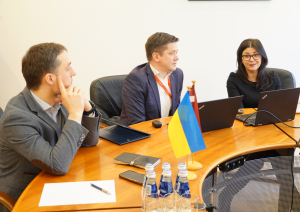
On February 25, a meeting was held with representatives of the Ukrainian Ministry of Digital Transformation, VARAM management, and LVRTC to evaluate the implementation of the solution and discuss opportunities for closer cooperation in the field of digital transformation.
“Recognition of our electronic signatures in Latvia represents a case of the highest level of digital trust. This is not merely a technical decision but true digital accessibility without barriers achieved through the close cooperation of both countries. It demonstrates how digitalization genuinely integrates Ukraine into the European space, creating new opportunities and a comfortable life for every Ukrainian. We are building a common digital market with Europe where borders do not hinder work or growth,” said Zoriana Stetsiuk, Deputy Minister of Digital Transformation of Ukraine.
"Latvia is currently the first country in the world to legally recognize Ukrainian e-signatures, establishing them as equivalent to handwritten signatures. This will significantly facilitate communication and cooperation between Ukrainian citizens in Latvia (currently more than 31,000), as well as Latvian and Ukrainian businesses, state and local government institutions. We appreciate Ukraine's achievements in digitization and the implementation of solutions that comply with EU standards — this is a significant step towards Ukraine's digital integration into Europe, and we are grateful to our Ukrainian colleagues for their close cooperation, as well as to our colleagues at LVRTC for the rapid implementation of the e-signature solution," says Gatis Ozols, Deputy State Secretary for Digital Transformation at VARAM.
During the meeting, officials discussed issues related to cooperation between Latvia and Ukraine in the field of digital transformation, with a particular focus on mutual recognition of electronic signatures, exchanged experiences in the development of the Ukrainian DIIA platform and the European digital identity wallet, and discussed the implementation of artificial intelligence solutions in public administration. Finally, issues of further cooperation were discussed.
In January 2026, amendments to the Electronic Documents Law came into force, stipulating the recognition of Ukrainian e-signatures in Latvia, making Latvia the first country to take this significant step, recognizing the legal validity of Ukrainian e-signatures and thus expressing support for digital integration.
Based on an initiative by the Ministry of Environmental Protection and Regional Development, e-signatures from Ukrainian trust service providers included in the European Commission's (EC) list of trusted third countries are recognized at the national level and are considered equivalent to handwritten signatures in Latvia.
"We have worked very consciously and purposefully to ensure that the amendments to the law are transformed into a real and practical solution as quickly as possible. Since last week, the Latvian State Radio and Television Center has ensured the recognition of electronic signatures issued in Ukraine in e-signature solutions, making document circulation simpler, safer, and more accessible for both countries. This is not just a technical change — it is an important step that strengthens cooperation, mutual trust and everyday ties between the people and organizations of Latvia and Ukraine. Verification of electronic signatures issued in Ukraine is available in the eParakstītājs 3.0 program, on the eParaksts.lv portal, and in all information systems that integrate LVRTC eSignature solutions," emphasizes Kārlis Siliņš, Director of the LVRTC Commercial Department.
Ukrainian civilians who are currently in Latvia or outside of it, and who, due to various extraordinary circumstances, may not have access to a secure (qualified) e-signature, can take advantage of the digital environment in Latvia to draw up legally binding e-documents and receive e-services.
Similarly, Latvian entrepreneurs have the opportunity to conclude transactions with representatives of Ukrainian companies by signing contracts with e-signatures from Ukrainian trust service providers included in the EC's list of trusted third countries.
In accordance with the amendments to the Electronic Documents Law, state and local government institutions, other public persons and their institutions, courts, persons and institutions belonging to the judicial system, as well as public service providers within the meaning of the Law on Public Service Regulators, are required to accept such duly signed e-documents.
Ukrainian e-signatures can now also be verified using the verification tool available on the European Commission's website: https://ec.europa.eu/digital-building-blocks/DSS/webapp-demo/validation
The regulations on digital identity and trust services in force in Ukraine also specify that qualified electronic signatures issued by the European Union (including Latvia) are equivalent to Ukrainian e-signatures and are equivalent to handwritten signatures. It will now also be possible to ensure mutual signing of documents with Latvian and Ukrainian e-signatures included in the list of EU-recognized trust service providers.
The responsible supervisory authority in Latvia is the Digital Security Supervisory Committee, which is responsible for publishing and updating information on its website about trust service providers included in the EC's list of third countries. The European Commission's list is available here: https://eidas.ec.europa.eu/efda/trust-services/browse/tc-tls